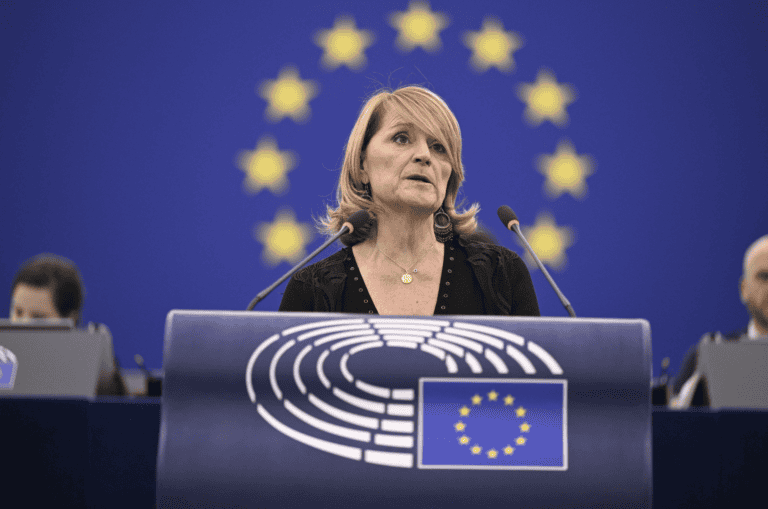
In the context of the upcoming Action Plan 2026–2030 under the European Strategy for the Rights of Persons with Disabilities (ESRPD), the European Parliament initiated the drafting of an own-initiative report on the future of the EU Strategy for the Rights of Persons with Disabilities beyond 2024. The aim of this report was to provide political guidance and recommendations to the European Commission for the next phase of EU disability policy.
The initiative was led by rapporteur Rosa Estaràs Ferragut, Member of the European Parliament. The European Union of the Deaf (EUD) contributed to the drafting process by sharing recommendations drawn from its Policy Recommendations on the ESRPD. These inputs were provided to MEP Rosa Estaràs Ferragut as well as to MEP Katrin Langensiepen, both members of the Committee on Employment and Social Affairs (EMPL) and the Committee on Women’s Rights and Gender Equality (FEMM).
These advocacy efforts contributed to the final report adopted by the European Parliament on 27 November 2025, which includes several recommendations particularly relevant to deaf people.
The report calls on all EU institutions, including the European Commission, the European Parliament, the Council of the European Union and EU agencies, to ensure that their information and official interactions are fully accessible to persons with disabilities. This includes the provision of International Sign interpretation as well as accessibility tools such as automatic speech-to-text technologies.
It also recommends that plenary debates of the European Parliament be made accessible in International Sign in order to increase the participation of persons with disabilities, including deaf people, in EU democratic processes.
In addition, the report calls on EU institutions to update their communication policies and citizens’ engagement platforms to fully comply with web accessibility standards. This includes ensuring that websites and online platforms provide accessible information for deaf users, including sign language content, and developing a post-2025 action plan on web accessibility.
The report also highlights the importance of ensuring that deaf people can effectively access essential public services. It calls for appropriate communication accommodations, including sign language interpretation, to ensure access to justice. In the area of healthcare, it urges Member States to guarantee accessible communication through measures such as sign language interpretation, captioning, and assistive technologies.
Furthermore, the report emphasises the importance of promoting equal opportunities for women with disabilities, including deaf women. It calls for targeted initiatives and leadership programmes that are accessible and inclusive, including through the provision of sign language.
EUD welcomes the work of rapporteur Rosa Estaràs Ferragut and the Members of the European Parliament involved in advancing these recommendations. EUD will continue its advocacy to ensure that the upcoming ESRPD Action Plan 2026–2030 fully reflects the rights and needs of deaf people across the European Union.