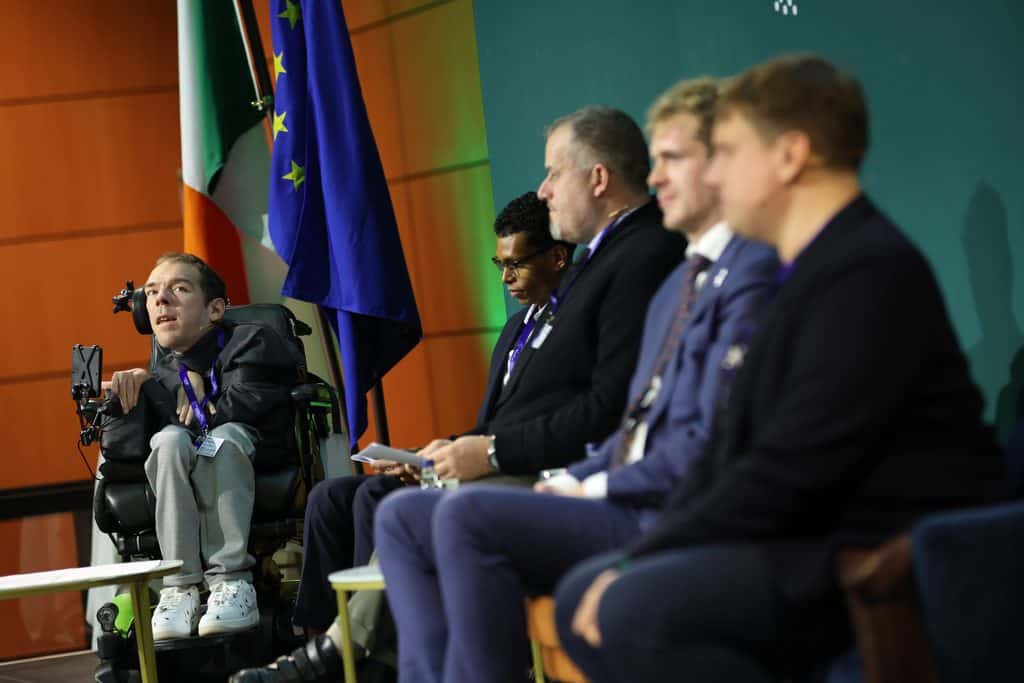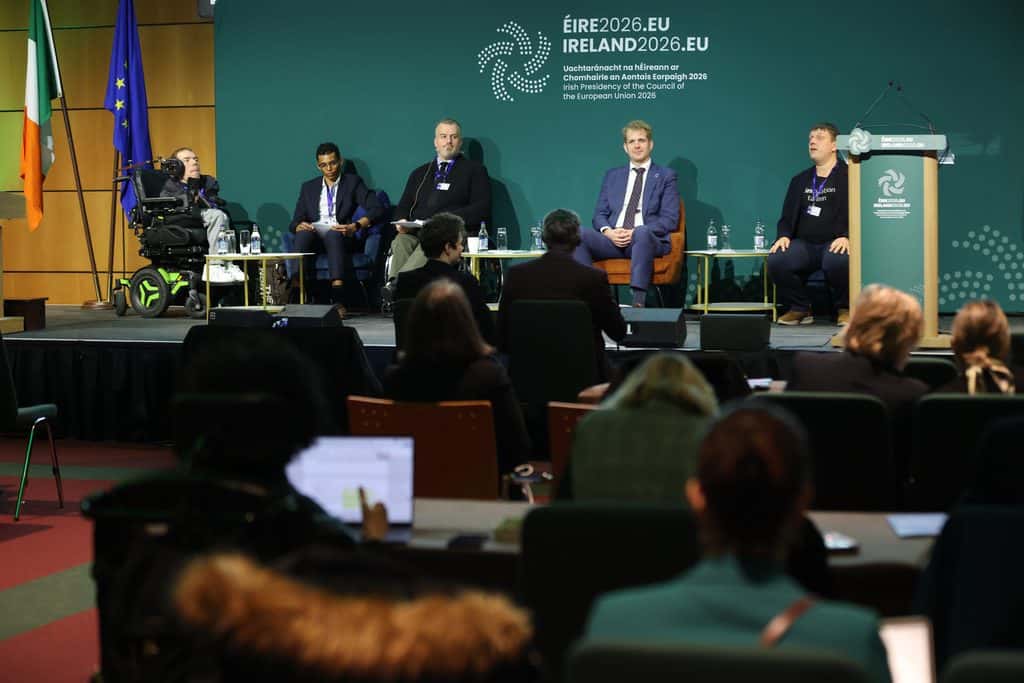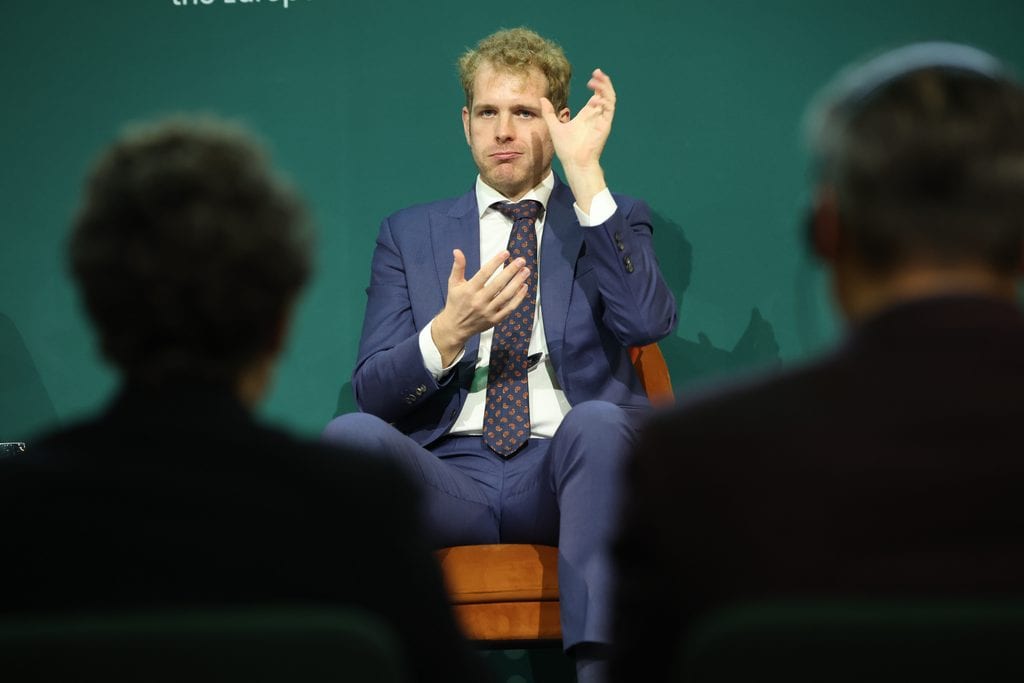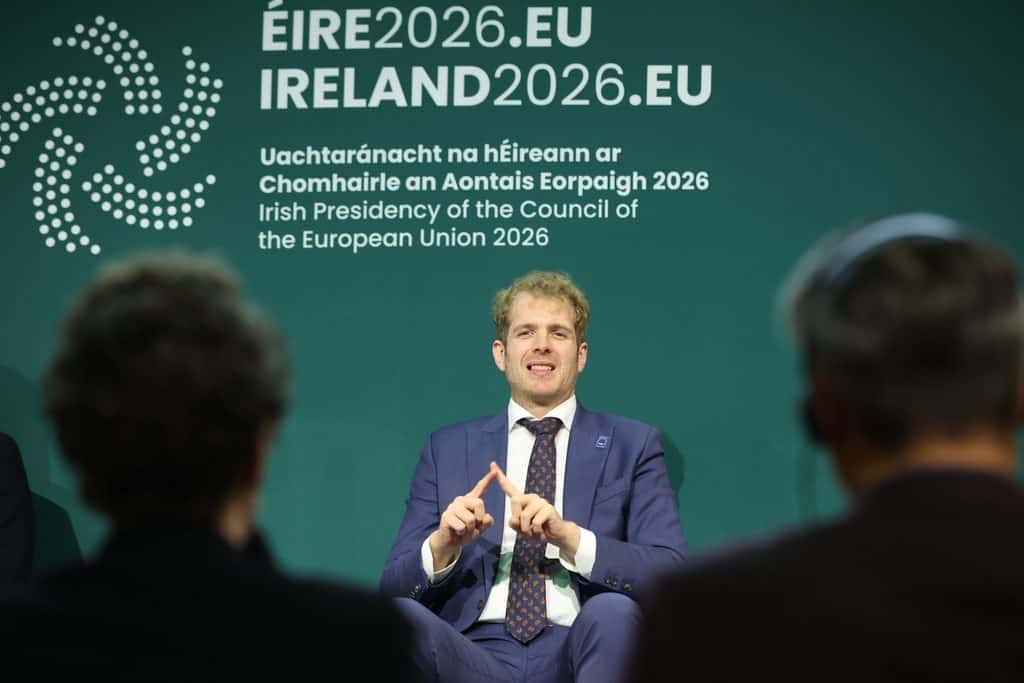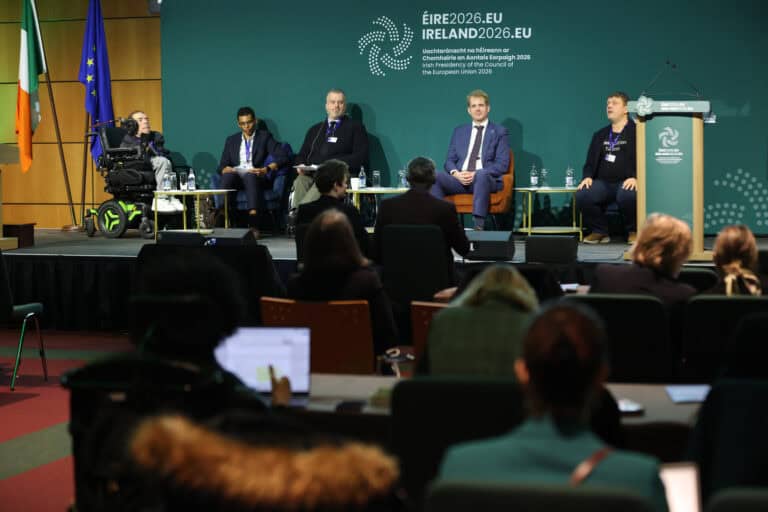
On 22 and 23 October 2026, the Irish Presidency of the Council of the EU hosted the High-Level Conference on Disability “Assistive Technology and Accessible Digital Technology – Empowering Participation” at the Convention Centre Dublin. EUD Policy Manager Alexandre Bloxs, who also sits on the Executive Committee of the European Disability Forum, represented EUD on Panel 3, “Assistive Technology in Everyday Life”.
Moderated by Kamil Goungor of the European Network on Independent Living (ENIL), the panel brought together three assistive technology users: Jakob Rosin of the European Blind Union, Soufiane El Amrani of Inclusion Europe, and Alexandre Bloxs for EUD. Its central question was simple: what difference does assistive technology make to someone’s ability to live the life they want to live? The speakers discussed independent living, education, employment and participation in the community, as well as what happens when technology is unavailable, inaccessible or does not work as intended.
Alexandre began by explaining what assistive technology means for deaf people in practice. Because deaf people cannot make ordinary voice calls, assistive technology is above all electronic communication, and in particular video calls that allow deaf people to communicate in their national sign language. “For deaf people, the most important assistive technology is the one that lets us communicate at a distance on equal terms,” he said.
He went on to point out a paradox. The technology itself is already in everyone’s pocket, since every smartphone can make a video call, but the services that make it useful are often missing. According to the joint EUD and EFHOH report Mapping Relay Services in Europe, only eight European countries offer a video relay service (VRS) available 24 hours a day, seven days a week. “In most European countries, a deaf person who needs to contact emergency services in the middle of the night simply cannot do so in sign language,” Alexandre stressed. “The device is there. The service is not.”
Turning to education, Alexandre warned against techno-solutionism, where assistive technology is treated as a cheaper substitute for human support such as professional sign language interpretation. Tools like automatic speech-to-text can be useful, but relying on them alone turns deaf learners into passive recipients of information. “A transcript lets you follow what is said, but it does not let you take part,” he explained. “Education is not only about receiving information. It is about asking questions, debating and contributing to the shared knowledge of a room. Only professional sign language interpreters make that possible.” Assistive technology can complement human support, he concluded, but it cannot replace it.
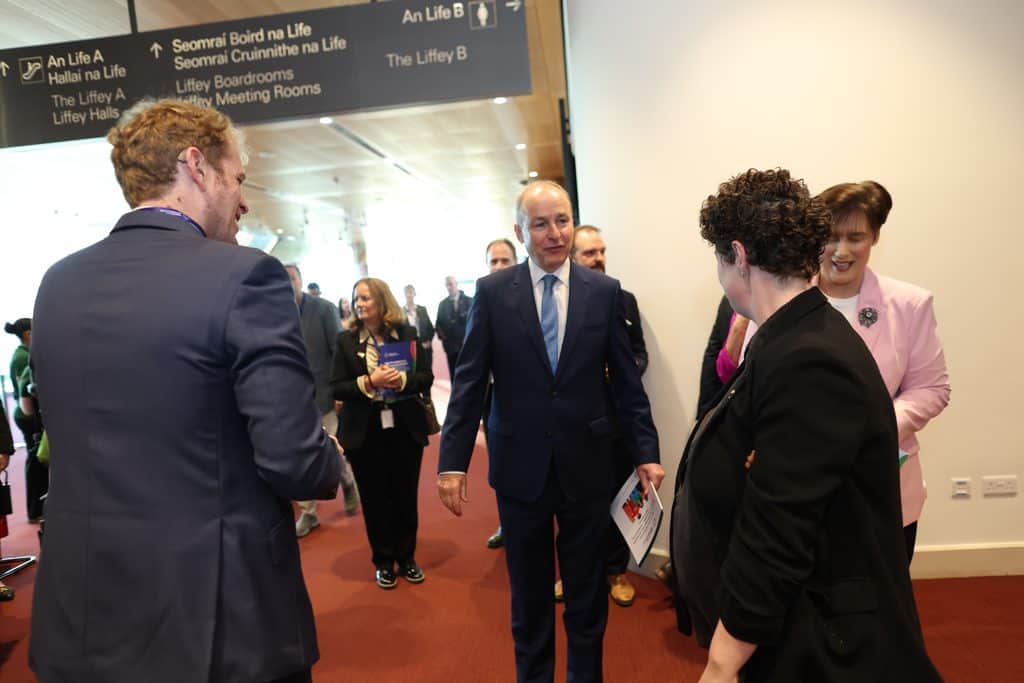
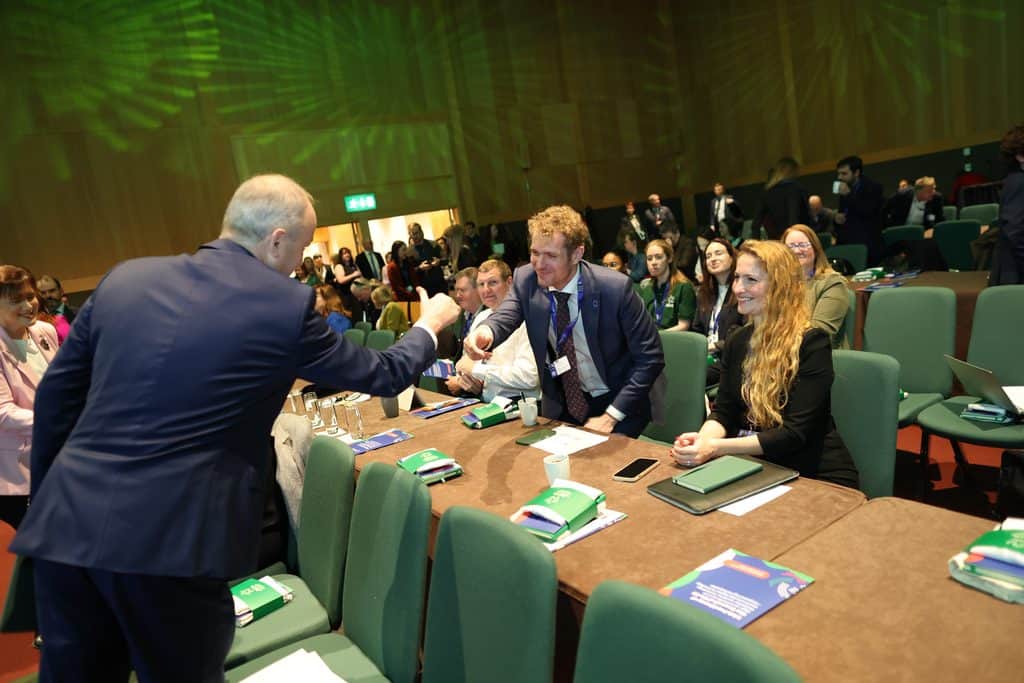
The conference was a valuable opportunity to place the lived experience of persons with disabilities at the centre of the EU debate on technology, accessibility and independent living, in line with the UN Convention on the Rights of Persons with Disabilities. In the margins of the conference, Alexandre also had the honour of meeting the Taoiseach of Ireland, Micheál Martin, and of briefly discussing the priorities of the deaf community with him.
We were honoured to attend the High Level Conference accompanied by the Vice-President of the Irish Deaf Society, our member from Ireland. This cooperation shows the close connection that exist between EUD and its members as we cannot exist and intervene at the national level without them
EUD thanks the Irish Presidency and the Department of Children, Disability and Equality for organising an accessible and inclusive conference, ENIL for moderating the panel, and our fellow panellists for a rich exchange. EUD will continue to call on the EU and its Member States to ensure that assistive technology is matched by accessible, available services, including 24/7 relay services and access to professional sign language interpreters, so that technology truly empowers deaf people rather than replacing the human support they rely on.
Copyright: Photos supplied by Julien Behal